Showing posts with label robert kiyosaki. Show all posts

Whatever It Takes, For As Long As It Takes

At the beginning of August, I posted a blog called “When Will The Fed Print Again?”. Now we know. The answer is now. On September 13th, the Fed announced that it will create $40 billion per month and use that money to buy agency mortgage-backed securities in order to push down long-term interest rates so as to support economic growth. Furthermore, the Fed’s press release stated, “If the outlook for the labor market does not improve substantially, the Committee will continue its purchases of agency mortgage-backed securities, undertake additional asset purchases, and employ its other policy tools as appropriate until such improvement is achieved in a context of price stability.”

Whatever It Takes, For As Long As It Takes

This round of money creation differs substantially from the two rounds that came before. During both of the earlier rounds of Quantitative Easing (QE) the amount of money to be created and the duration of the exercise were announced from the beginning. This time no limits on either quantity or time were announced. In other words, this time the Fed is going to continue creating fiat money for as long as it takes to bring down the unemployment rate. Some economists have dubbed this exercise “QE Infinity” instead of QE 3 due to the opened-ended nature of the Fed’s commitment.

But why did the Fed launch this extraordinarily aggressive program of open-ended money creation just now? In my August 2nd blog, mentioned above, I outlined four triggers that would force the Fed to switch back on its printing presses: 1) a stock market crash; 2) much higher government bond yields; 3) deflation; or 4) a jump in the unemployment rate. None of those criteria were met between then and now. Moreover, the spike in food prices brought about by the US drought should have deterred the Fed since there is a clear cause and effect relationship between paper money creation and food price inflation. Nevertheless, the Fed went ahead anyway. Why?

Some commentators have expressed the opinion that the Fed acted to help President Obama get reelected. I don’t believe that is the reason. If the Fed had wanted to help reelect the President, it would have acted sooner to ensure the economy was powering ahead by election day in early November. It waited too long for that. It’s going to take more than a month or two for this measure to begin to meaningfully impact economic growth.

I believe the Fed acted now because it is afraid – afraid that our global economy is about to go under. In the past, I have written that it is useful to think of the global economy as a big rubber raft, but one inflated with credit instead of air. On top of the raft float not only all the asset classes – stocks, bonds, commodities and real estate – but also the world’s seven billion people. So much credit has been created globally that the raft is now fundamentally defective because the income of the world’s population is insufficient to pay the interest on all the debt. The raft is full of holes and the credit keeps leaking out as one group after another is forced to default on its debt. Therefore, the natural tendency of the raft is to sink. But, if the raft sinks not only will asset prices crash, people will begin to die – just as they did during the 1930s and 1940s, after the credit-inflated global economy of the Roaring Twenties went down.

Signs abound that the global economy is beginning to submerge. The US economy grew by only 1.3% during the second quarter. The UK is in recession. Europe’s economy is in crisis. And Japan’s economy, which has been in crisis for 22 years, is deteriorating rapidly due to a sharp contraction in exports. Even China’s great economic boom is over. Chinese exports grew by only 1% year-on-year in July. It should come as no surprise that China’s export-led growth model cannot work when all of China’s trading partners are in crisis.

With the global economy going down fast, the Fed has begun to panic. Having already cut short-term interest rates to close to zero percent, it has only one policy tool left to keep the global economy afloat. That is to create more money and inject it into the raft in order to reflate it.

The Fed is not acting alone. In recent weeks, the European Central Bank has announced it will do “whatever it takes” (i.e. print as many Euros as it takes) to hold down the interest rates on Spanish and Italian government bonds so that the Eurozone does not disintegrate. And, in late September, the Bank of Japan announced it would expand its own version of Quantitative Easing by the equivalent of $126 billion. The Bank of England has been the most aggressive player of all, having bought up approximately 30% of all UK government debt with newly created money.

The central bankers are at emergency stations and manning the pumps. They are pumping credit into the global economy as fast as they dare. If they don’t pump in enough, the raft will sink. If they pump in too much, it will turn into an inflationary balloon and float away.

Will this work? It will – for a while. Then it won’t. So much fiat money creation would have caused very high rates of inflation long ago had it not been for one, separate factor: globalization. Because of globalization, the marginal cost of labor has fallen 95%. It is no longer necessary to pay a factory worker $200 per day in Detroit to build a car. That job can now be done with $5 a day labor in India. This unprecedented collapse in wage rates has been extraordinarily deflationary; and that deflationary pressure has completely offset the inflationary pressure produced by the enormous increase in fiat money creation in recent years.

For the moment, fiat money creation is keeping the global economy afloat and globalization is preventing inflation by driving down wages in the developed world. This arrangement is inherently unsustainable, however. The global economy is in crisis (and sinking) because the income of the world’s population is insufficient to service the interest on all the debt. With median income in the developed economies shrinking because of globalization, it is inevitable that credit defaults will accelerate, causing the global economy to sink that much faster.

The only lasting solution to this crisis will be one that causes incomes to rise.

From: Richdad

Why the poor work for money…and the rich don’t

When I was a young boy, I had the advantage of two perspectives on money because I had two dads—a poor one and a rich one.

My poor dad was a government employee. As the superintendent of the Hawaii school district, he made a decent salary, had health benefits and enjoyed a pension. Though he had a good job, he didn't understand money. So, he struggled financially all his life.

Why the poor work for money…and the rich don’t

My rich dad was a business owner with a financial education. Over the years, he invested in and built an empire that ranged from small convenience stores to large hotels. He didn't have a traditional job, but he understood money. As a result, he became very rich and didn’t struggle to make ends meet.

He taught his son, Mike, and me how to view and use money to become rich through a series of lessons, and the first lesson he taught me was, "The rich don't work for money."

My rich dad said, "The main cause of poverty is fear and ignorance."

His point was that most people are so afraid of not having money that they'll do anything to get it. Usually, this means working jobs they don't like, for people they don't like, for a salary they don't like.

The reasons for this is that while people know they want fine things, they don't know of any other way to attain them than trying to work for more and more money. The more they make, the more they buy, and the more money they need to make.

It's a vicious circle that rich dad called the Rat Race.

As people become accustomed to having more and more nice things, they become more fearful of losing all they've worked for. So, they work harder to please their boss and keep their jobs. All the while, they become more and more miserable.

Some of these people are poor in spirit because they are unhappy. Others are poor in actuality because even though they work hard, they don't make enough money to live a good life. Either way, they are living a life of poverty because they don't understand money and how to make it work for them.

As young boys, my rich dad wanted to teach Mike and me a valuable lesson about money. He did so by having us work at one of his convenience stores for three hours each Saturday. Our job was simple but mind numbing. We dusted the shelves each time a car drove through the parking lot, sending a wave of dust through the store doors that were open to keep the store cool since there was no air conditioning.

In return for this, we each received $0.30, which was not a lot of money, and a promise to learn how to be rich. At the end of each shift, I used my money to buy comic books and went home wondering when rich dad would teach me how to be rich.

As weeks went on, I got my $0.30, but I never got the teachings I expected on how to be rich. Finally, I was ready to quit. I was making poor money for hard work and it wasn't worth it—or so I thought. That is when I finally got my first lesson on money.

"I want to teach you the power of money," said rich dad.

He went on to explain that our desire for more money had the effect of blinding us. Rather than see opportunity, we let our lack of money give us tunnel vision. The only option was to have him pay us more. We were working for money.

He then explained that he didn't work for money, but did what he loved and made money work for him. Our eyes were opened.

After rich dad's financial education lesson, Mike and I put our heads together to see how we could make money work for us as well. The answer had been in front of our faces the whole time we were dusting the shelves and complaining about how little we were making.

Rich dad said, "The sooner you stop working for a paycheck, the sooner you'll see things other people never see."

After rich dad's lesson, Mike and I worked at his store for a couple weeks and noticed that the store manager would take the older comics, cut the covers in half, and give them to the distributor for a credit. This gave us an idea.

When the distributor came in to pick up the old comic books, we asked him if we could have them. Because we worked at the store, he said yes, but only if we didn't resell them.

Keeping our end of the bargain, we didn't sell them—we rented them out. Using a spare room in Mike's basement, we stockpiled hundreds of free comic books, and each Saturday we opened our library from 2:30 to 4:30 p.m. to the kids in the neighborhood. Admission was $0.10 a day, a steal since each book was $0.10 and you could read five or six in the two hours we were open.

As things got rolling, we averaged $9.40 per week—a lot more than the $0.30 we were making each week at the store. But we'd never have had the opportunity had we not worked there and had our eyes open to opportunity. The best part of our new venture was that we made this money even if we weren't there at the comic library.

We'd learned to make money work for us.

From: RichDad

Discover the truth and reach your financial freedom goals faster

In the past few blogs, I’ve talked about having a mission and what it takes to sustain a long, healthy business and life.

But what if you are still at square one trying to figure out who you are and what you really want in life?

As I talk about in It’s Rising Time!, our entire company took the Kolbe Index. Created by Kathy Kolbe, an expert on human instincts, this tool helps identify a person’s natural, innate and unchanging talents. It helped us put the right people in the right jobs so they could excel.

During the process, I found out that I’m not a “natural organizer,” and by turning over my organization tasks to someone who loves to organize, I was able to accomplish more. Sometimes, it takes an outside source to show us our strengths and weaknesses.

But what do you do if you don’t have anyone you feel comfortable talking to or the funds to see a counselor or service that can help?

Well, have you ever journaled? It’s a very effective way to discover more about yourself and the environment you’re in. And all it takes is something to write with, a pad or notebook and you!

Are You Looking For Answers?

Whenever I’m looking for an answer, have an issue I’m struggling with or just want to get more in touch with what’s really going on in my life, I write in my journal. It’s a form of meditation for me, and it may work for you too. But when you journal, there are two, key rules to remember:

It’s for your eyes only.
When you write in your journal, write whatever you want, however you want. After all, you are the only person who is going to read it, and this is about you.

Don’t analyze, question or filter anything. Write whatever you are feeling or want to get out of your system. This way, the truth will come out.

Keep writing.

Write until you find the answers you are looking for and the issue is complete. There is no time limit and no restriction. And you’ll know when to stop writing. It will be a rising-time moment, and you’ll feel differently. You may be more relaxed, have a sense of calm, be excited about a particular idea, or feel something else depending on your specific situation.

Being true to yourself is essential to reaching your dreams of financial freedom.

If you are having issues with your finances, business, personal life, and more, it’s time to focus on you and discover what you need to do to change things for the better. Whether it’s taking the Kolbe Index, talking to a friend, family member or counselor, or writing in a personal and private journal, get answers and find out the truth.

Remember, each of us is gifted and unique. Don’t let others, or even your own thoughts, sabotage your success. As I say in the book…

“This is your journey, your dream, your process. Make it true to you. It’s Rising Time!”

What steps are you going to take to discover more about you?

From: Richdad

Ebook Rich Dad's Success Stories by Robert Kiyosaki


Click to see larger images 

Excerpt: Rich Dad's Success Stories: Thousands of readers have gone on to greater wealth by applying the Rich Dad philosophy. Read an excerpt from the latest in the series, Rich Dad's Success Stories.

Download full Audio Book Rich Dad's Success Stories:


Part 1
http://adf.ly/CNjSV
http://adf.ly/CNjSW
Part 2
http://adf.ly/CNjSX
http://adf.ly/CNjSY
Part 3
http://adf.ly/CNjSZ
http://adf.ly/CNjSa
Part 4
http://adf.ly/CNjSb
http://adf.ly/CNjSc
Part 5
http://adf.ly/CNjSd
http://adf.ly/CNjSe

Rich Dad Poor Dad scam, Robert Kiyosaki scam?

Some love Rich Dad Poor Dad Author Robert Kiyosaki. Some can’t stand him. Why is it about this this guy that provokes such strong reactions?
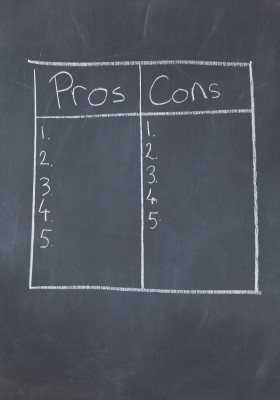
Set forth below are five things I see as positives and five things I see as negatives.


Robert Kiyosaki The first thing I like about Robert Kiyosaki is that he is talking about my favorite personal finance topic--how to win financial freedom early in life.

Robert Kyosaki is hugely successful. The Rich Dad Poor Dad book has remained on the bestseller lists for years. He has sold over 20 million books. He offer all sorts of spin-off products and services--games, seminars, tapes, consulting. The guy is an industry unto himself.

There are some in the Financial Freedom Discussion-Board Community who sneer at his success, suggesting that anyone that successful must be all sizzle and no steak. I don’t buy it. To become that successful, Robert Kiyosaki must have been heard by a lot of people to be saying something worth listening to.

There was an album title once that argued something to the effect that six million Elvis Presley fans couldn’t all be wrong. Robert Kiyosaki is the Elvis Presley of personal finance.

Let’s agree that Robert Kiyosaki is not without his flaws. Still, there just has to be something important and real in his message too. Otherwise, there is no way that it could have hit the spot for so many readers. The biggest thing that sells books is word-of-mouth praise for them. I think it is fair to say that Robert Kiyosaki is winning a lot of positive word-of-mouth reviews. So the Robert Kiyosaki phenomenon needs to be taken seriously.

I think that the thing that Robert Kiyosaki has going for him is much the same thing that the Financial Freedom Discussion-Board Community has going for it. We have seen how people react at our boards when we keep our discussions focused on how to attain early retirement through more effective saving or investing or career change strategies. They go nuts. They love that stuff. I think that Robert Kiyosaki is tapping into the same desire for new approaches to money management issues that has been driving the success of our discussion boards for the past six years.

In short, I think this guy is one of us. He says some things that most of us don’t say, and he fails to say some things that most of us do say. But he is directing his energies to addressing the same basic questions. He is seen by many people who are frustrated with the conventional work and money rules to be offering a more rewarding path to follow. That’s a good thing, and, to the extent he has offered real help to those people, he should be recognized as having done so.

The second thing I like about Robert Kiyosaki is that he rejects outright a lot of the conventional money management advice.

I once read a quote by Robert Kiyosaki that I liked a lot. He said something to the effect that, unless one-third of your readers don’t like you, you are doing something wrong. It sounds funny to put it that way, but there is a good bit of truth in that observation.

There have been two phases to my posting career on our boards. The pre-May 13, 2002, version of “hocus” (that’s the screen-name I use when posting to our boards) was one of the most loved posters in the history of the Motley Fool boards. The post-May 13, 2002, version of hocus is one of the most controversial. It’s the same guy writing the posts, of course. The difference is that on May 13, 2002, I reported accurately what the historical stock-return data says about safe withdrawal rates. I was the first poster in our community to do that, and there are a good number in our community who were happier not knowing what the data really says. So I stirred things up more than a little bit with that post. I think it is fair to say that I got people’s juices flowing with that one.


Unconventional Money Advice I think that was a healthy development, both for the community as a whole and for me as a poster. The community needed a little shaking up at the time; our conversations had grown stale. And I needed to stretch myself a bit. Things had reached a point where people were giving recommendations to my posts without even thinking about them, perhaps without even reading them. Since the May 13, 2002, post, it’s been different. I get as many boinks on the head now as I used to get pats on the back. But people are reading my stuff with care again and people are arguing about on-topic stuff again, and we are growing as a community again. So I think we had to go down that road.

Robert Kiyosaki shakes things up. He rejects the conventional advice to get a good education and to get a safe job and to stay out of debt and to invest for the long-term. I don’t think he is always right in the criticisms of the conventional advice that he puts forward. But I think he serves a good purpose in questioning ideas that too many have too readily come to put their faith in. The ideas that are rooted in something real will withstand his attacks. Those that are not deserve to fall, and Robert Kiyosaki will be doing a good thing if the push he gives to them causes them to do so a little sooner.

The third thing I like about Robert Kiyosaki is that he is entrepreneurial.

One of the things that bugs people about Robert Kiyosaki is that he makes so gosh-darned much money offering personal finance advice. It’s hard for me to relate too much to this one. If the guy offers products and services of value, he should get compensated for it. If there is no value in what he offers, I don’t see how he has managed to get so many to buy. It’s not easy persuading people to part with their money. I have a hard time finding too much fault with those who manage to pull it off, so long as they are not doing anything outright fraudulent.

One entrepreneurial thing Robert Kiyosaki does is to sell a game that teaches people his approach to money management, and to advertise the game in his books. Good for him. It’s hard to make money selling books because people have little time to read today and most are not accustomed to paying too much for the few books they do buy. Robert Kiyosaki is essentially using his books as advertisements to sell higher-margin products and services.

There are lots of people who would turn up their noses at paying $20 for a book who would gladly part with $100 for a game teaching much the same lessons. If people would rather obtain their money management insights through games than through books, why shouldn’t Robert Kiyosaki package the information in the form in which those people would like to obtain it? He’s meeting a strongly felt need for money management insights packaged in non-book form. How can that be viewed as a bad thing?

The fourth thing I like about Robert Kiyosaki is that he gets people talking.

Let’s say that Robert Kiyosaki doesn’t have all the answers. I personally do not believe that he does. He at least seems to possess a talent for asking some provocative questions, does he not? He gets people talking.

A writer is not always required to provide the answers to the questions he raises, in my view. Sometimes a writer does a good thing just by getting a conversation started. The old money management rules do not work. People don’t save effectively. People don’t invest effectively. Something needs to change. Kiyosaki is not providing all the answers, but the conversations he is sparking are getting others to come up with new ideas. I see that as a positive.


The Truth About Money


I think that we are in a transition stage in our thinking about how to manage our money effectively. The old rules used to make sense. It used to be that, if you got a good job, you just needed to hold onto it and all would be well. I don’t think that is so anymore. I think that is why there is such a thirst for Robert Kiyosaki’s insights. I think that a good number of the conversations that he is getting started are someday going to lead to someplace good.
The fifth thing I like about Robert Kiyosaki is that he hits on an important point in the distinction he draws between possessions that constitute assets and possessions that constitute liabilities.

Robert Kiyosaki makes a big point in his Rich Dad Poor Dad book of the importance of distinguishing assets from liabilities. He doesn’t explore the question with enough clarity or depth, in my view. But he is on the right track in making the point that the distinction is one of significance. It is a point that I hope we will be addressing with more clarity and depth in the discussions that we hold at our boards in days and weeks and months and years to come.

The first thing I don’t like about Robert Kiyosaki is that he is a tease.

i have read several of Robert Kiyosaki’s books and have been tempted to buy more of them. But he has a tendency to promise and promise and promise to address something and not get around to doing it for many paragraphs and pages and chapters and even books. That is frustrating and annoying.

There are useful things to be learned from reading the books, in my view. But it should not take so much time and effort to learn them. The tease factor in Rich Dad Poor Dad is way too high, in my estimation. And it is also too high in those of his others books that I have either read or skimmed.

This tease factor is a stone cold drag, in my view. My advice to Robert Kiyosaki is to just say it.

The second thing I don’t like about Robert Kiyosaki is that he does not make it clear to what extent Rich Dad Poor Dad contains elements of fiction.

Is rich dad a real person? Is poor dad a real person? Are they totally real or partly real and partly fictional?

The answers are not entirely clear in my mind. They should be. I see nothing wrong with the idea of using fiction to convey money management insights. But it is important that fiction be labeled fiction clearly enough so that everyone reading it knows that that is what it is.


The Truth About Saving

The links at the bottom of this page indicate that a good number of people have doubts in their minds as to the extent to which the Rich Dad Poor Dad book contains fictional passages. That troubles me.
The third thing I don’t like about Robert Kiyosaki is that he underplays the risks inherent in many financial freedom strategies.

I’m all for raising doubts in people's minds about the value of the conventional advice on how to save and of the conventional advice on how to invest and of the conventional advice on how to advance in one’s career. And I understand that it sometimes takes strong language to break the inertia that causes people to stick with established ways of doing things.

That said, there is a danger in going too far, in suggesting that the road less traveled is an easy road. The road less traveled is often not an easy road. Many people who do things differently enjoy big rewards for doing so, but many other people who do things differently endure big hardships for doing so.

I think that Robert Kiyosaki sometimes underplays the risks inherent in his money management strategies. I think that is a disservice to his readers. People need to know the downside of a money management approach they are considering before they can make an informed decision as to whether to go with it or not.

Robert Kiyosaki’s job is not just to persuade. It is to inform too. I think there are times in the Rich Dad Poor Dad book when the persuasion effort takes center stage and the informing project obtains less attention than it merits.

The fourth thing I don’t like about Robert Kiyosaki is that he charges too much for his game and sometimes promotes his products too heavily in his books.

It’s one thing to be entrepreneurial. It’s something else to take advantage of people’s enthusiasm for the idea of learning how to win financial freedom early in life. It’s not always clear where to draw the line. But I think it is fair to say that Robert Kiyosaki offers a lot of products and services, cross-promotes them a lot, and perhaps charges more for some of them than it is neccesary for him to charge. If he doesn’t cross the line, he sometimes travels closer to the line that I think it is necessary to go.

The books are generally not too expensive. But the game I mentioned above is offered at a surprisingly high price. I can see why he needs to earn a nice markup on the game to permit him to create the books and still have the overall business generating a nice profit. But does the game really need to cost as much as it does? I have my doubts.

The Truth About Investing It sometimes seems that the world is divided into two classes of people: (1) those who possess no entrepreneurial skills whatsoever and who therefore are not able to create successful business enterprises; and (2) those who are unable to see the need for reasonable limits on their monetization strategies. I am glad that Robert Kiyosaki is successful because, if he were not, lots of people who have learned things from him would have never been exposed to his ideas. That said, it is my sense that he could turn down the volume on the money machine a few notches and thereby interest an even larger group of middle-class workers in his ideas.



The fifth thing I don’t like about Robert Kiyosaki is that he is too dismissive of the safety-first approach followed by Poor Dad.

Risk-taking is not always good. Playing it safe is not always bad.

I think there are many middle-class workers who think they are playing it safe but who are really taking on more risk than they realize because the rules of the money-management game have changed in ways that make strategies that appear on the surface to be safe to in reality come with a good bit of long-term risk attached to them. Robert Kiyosaki is doing a good thing by shaking up the thinking of a lot of people on these sorts of questions.

He is wrong, though, to be as dismissive as he sometimes is of the play-it-safe-and-conventional approach. There are reasons why many follow that path. In some cases, people question whether their skill sets are such that they can be effective risk-takers. In some cases, people are concerned about the effect that their decisions to embrace risk might have on their families. In some cases, people are too busy to do the research needed to take on risks in an informed way, and so an idea that they are open to gets put on the back-burner for a long stretch of time.

Overcoming Obstacles to Success Making the case for risk-taking is a good thing. Selling it too hard can be a mistake. That’s the Practical Dreamer’s way of looking at things, in my view.
To learn more about Robert Kiyosaki's financial freedom ideas, please check out his web site.

John T. Reed is a critic of Robert Kiyosaki.

Participants in an Early Retirement Forum discussion of the Robert Kiyosaki phenomenon point to both pros and cons.

John Bogle's Big Mistake


From: passionsaving

Download game Cashflow 101 & 202 Full


Cashflow 101 is an educational tool in board game format designed by Robert Kiyosaki (author of Rich Dad, Poor Dad), which aims to teach the players concepts of investing by having their money work for them in a risk free setting (play money) while simultaneously increasing their financial literacy and stressing the imperative nature of accountability.
There are two stages to the game. In the first, "the rat race", the player aims to raise his or her character's passive income level to where it exceeds the character's expenses. The winner is determined in the second stage, "the fast track". To win, a player must get his or her character to buy their "dream" or accumulate an additional $50,000 in monthly cash flow.


In place of “score cards”, there are financial statements. The game requires the players to fill out their own financial statements so that they can see more clearly what is happening with their money. It generally shows how assets generate income and demonstrates that liabilities and 'doodads' are expenses.
Robert Kiyosaki also designed two other Cashflow games: a children's version called Cashflow for Kids, and a follow-up game to Cashflow 101 for more advanced players, which he released as Cashflow 202.
Kiyosaki also designed electronic versions of Cashflow 101 and Cashflow 202 called "Cashflow The e-Game" for Microsoft Windows and Macintosh operating systems. Currently, these games are compatible with Mac OS X Snow Leopard and Windows 7.

I uploaded to Rappidshare, you guy can go to link down load Cashflow game 101, 202 and Cashflow for Kids here:

Download Cashflow Game

Ps: Download Monopoly Game

Useful links: Create a blog - Create your own website -  Web Hosting - Make Money Online 

Audio Book Security vs Freedom by Robert Kiyosaki

Most of us would like to believe we can have both security and freedom. But in Rich Dad® terms, these are two opposing values. My rich dad said, "Freedom and security are not the same ideals. In fact, in many ways, freedom and security are exact opposites. The people who have the most security are people in prison. Prisoners have the least freedom and the highest security. People in prison do not need to provide housing, food, recreation, health care, or education for themselves. They have a lot of security but at the price of their freedom." 

One advantage of living in a free society is the freedom to make choices. There are two big choices according to my rich dad: the choice of freedom and the choice of security. Both choices have appeal, both have strengths and weaknesses, and both come with a price. If you choose freedom, the price is paid up front, at the beginning of your life. If you choose security, you pay a huge price in the form of excessive taxes and interest payments. Often the price is paid later in your life. 

Look at the bankruptcy debacle of Enron, one of the world's largest corporations. The price the loyal, hard-working, security-seeking employees paid is very high: they lost their jobs and their retirement plans. Unfortunately, many are paying this price at the end of their working years, just when their options diminish because of age or health. 

Security vs. Freedom: It's Your Choice

Today, many employees are learning their jobs are not secure and neither are their retirement plans. In the coming years, 75 million baby-boomers may discover that their stocks and mutual funds were not as secure as they thought, forcing them to retire to a lower standard of living that their parents enjoyed. With the prospects of downsizing looming over their heads, some have taken the initiative to start their own businesses. Should you be one of them? 

My rich dad said, "Somewhere along the way, people become more desirous of security and have paid the price by selling their freedom. You may have noticed that schools today focus primarily on job security rather than financial freedom. The problem is most people do not know that the cost of that security is their freedom." He continued to say, "If you choose security, someone is always telling you what hours to work, how much you make, and even when you can eat your lunch. That is the price of security." 

Freedom means having more choices, not security. You have a choice to be poor, middle class, or rich. If you choose to be rich, then you need to learn a whole new game. But it requires a different mindset and financial intelligence. You will be free to work or not to work. Your knowledge will bring you freedom from work because you will learn how to make your money work for you. The choice is yours. 

Download Audio Book: Security vs. Freedom by Robert Kiyosaki

Security vs. Freedom Part1
Security vs. Freedom Part2
Security vs. Freedom Part3
Security vs. Freedom Part4
Security vs. Freedom Part5
Security vs. Freedom Part6
Security vs. Freedom Part7
Security vs. Freedom Part8
Security vs. Freedom Part9

How to Become a Real Estate Investor: Robert Kiyosaki & Dolf de Roos


    This DVD contains the following topics:
  1. Look for cash flow opportunities in every property you see
  2. Tell the difference between a gold mine deal and a money-pit disaster
  3. Increase the value of any property without spending much money
  4. Understand what the seller really wants from a sale
  5. Quickly analyze the cash flow potential of an investment
  6. formulate an offer the seller won't want to refuse
  7. Purchase an investment property with little or no money of your own
  8. more!


Download Full DVD How to Become a Real Estate Investor:
DVD3: Part1, Part2, Part3

Ebook Retire Young Retire Rich - Robert Kiyosaki

Download Ebook: Retire Young Retire Rich 
Download Audio Book Retire Young Retire Rich 
Part 1: Link1,  Link2Link3Link4
Part 2: Link1, Link2, Link3
Part 3: Link1, Link2, Link3

Retire Young Retire Rich Description: 
How to Get Rich Quickly and Stay Rich Forever! In this fifth addition to his highly successful "Rich Dad" series, Kiyosaki (Rich Dad Poor Dad) now focuses on the power of debt leveraging in order to work less and earn more. Beginning with the principle of changing attitudes about financial freedom, he explains the difference between earned income and passive or investment income, managing good debt that makes money for you, such as in real estate, the fundamental concern about 401(k) retirement plans that are too focused on stock market performance, and the need to create a long-term financial freedom plan and the emotional discipline to stick to it.


Listeners will likely be captivated as they learn how to replicate his success, and the crisp narration by Jim Ward definitely makes this fact-filled collection of sound financial advice another hit for Kiyosaki. The solid, practical insight into how to put together a plan to financial freedom will require a commitment to changing lifestyles and personal attitudes about work and, of course, enough time left in life to allow the investments to succeed. Highly recommended for all public libraries, especially those that have not yet begun to add Kiyosaki's other super titles to their business and investment collections.

The way to achieve the goal of a lifetime.Its the dream that is quickly becoming a reality making so much money at an early age that you could decide when to retire, knowing full well that you have enough stashed away to ensure a life of comfort. In this new book, the fifth in the Rich Dad series, financial guru Robert Kiyosaki provides practical insight on how to put together a financial plan which will not only make you prosperous, but will also allow you to map out the freedom to choose your own retirement age.Retire Young Retire Rich follows the smash success of the four previously published titles in the Rich Dad series, all of which are New York Times bestsellers. The series has also appeared on the Wall Street Journal, Business Week, USA Today, and countless other business bestseller lists.Rich Dad Poor Dad is a starting point for anyone looking to gain control of their financial future. USA Today


Download Ebook: Retire Young Retire Rich 
Download Audio Book Retire Young Retire Rich 
Part 1: Link1,  Link2Link3Link4
Part 2: Link1Link2Link3
Part 3: Link1Link2Link3


Ebook How to FIND GREAT INVESTMENTS - Robert Kiyosaki

Download Ebook:  How to FIND GREAT INVESTMENTS
Download Audio Book: Part1, Part2, Part3

How to: FIND GREAT INVESTMENTS
Tips for Evaluating Opportunities in Business and Real Estate
Learn what to look for, what questions to ask - and what you can do to impact the bottom line profitability of your investments. Robert Kiyosaki with Sharon Lechter and Kim Kiyosaki.

Train your mind to see investments that your eyes don't! Learn why some investors are "blinded" - and how you can open your mind to see opportunities around you:

In this audio program you will learn:
* Key questions to ask yourself BEFORE you invest.
* How to "see" opportunities that others miss - and how to use systems (and the BI Triangle!) to target areas within a business or property that can drive profitability.
* How the way you leverage your money can determine the size of the return.
* How and why trends impact the value of businesses, real estate investments, and paper assets.
* Why education and vocabulary are essential first steps to successful investing.
* To weigh cash flow versus capital gains - and why cash flow is the game you want to play.
* Why, in real estate, the value of a property is directly related to the quality of its tenants.

Download Ebook:  How to FIND GREAT INVESTMENTS
Download Audio Book: Part1Part2Part3

Ebook Rich Kid Smart Kid - Robert Kiyosaki

Download Ebook: Rich Kid Smart Kid
Download Audio Book: Rich Kid Smart Kid

Rich Dad's Rich Kid, Smart Kid may be the most helpful book ever for guiding adults on how to assist children and teenagers in learning about how to organize their lives to be more successful. I highly recommend this book to every parent, god parent, grandparent, aunt, uncle, and caring older sibling.
I think this is the best of the Rich Dad, Poor Dad series, and clearly deserves more than five stars.
Think of this book as the instructor's guide to teaching Rich Dad, Poor Dad combined with a basic guide to helping young people identify their strengths and learning styles. The book also provides a sound foundation for helping young people build their self-confidence in a healthy way.

Unlike the other books in the series, this one draws on the positive lessons of both Mr. Kiyosaki's Rich Dad and his Poor Dad rather than just the Rich Dad. To overcome Mr. Kiyosaki's lack of experience as a parent (he has no children), the book relies on important academic and professional research to add context for Mr. Kiyosaki's observations about his own childhood.
The book begins by citing a recent HEW study that showed that 56 out of 100 people who are 65 need either government or family financial assistance to make ends meet. The book is aimed at providing children with the learning experiences to allow them to avoid that dismal financial result.
Then the perspective shifts to pointing out that the change from an industrial to an information economy has shifted the rules of success in our society. The old rules were to get a good education, get a good job, and have financial security from one employer. The new rules are quite different and feature being in an environment in which one will be a free agent, work in a virtual company, get paid for results, work in many professions, retire early, work only when you are interested in working, learn in seminars rather than classes, focus on your core talents, emphasize developing and implementing new ideas, self-direct your own investments for retirement, and work at home rather than in an office.
To succeed, your child will need at least three basic strategies: one for lifelong learning, one for developing a career, and one for creating financial success.
The book points out that most people will have to relearn the most important areas they work in about every 2-4 years, shift professions as they reach the age at which they become obsolete, and make their money work hard for them.
In the second part of the book, you will learn many basic ways to help your child learn these lessons. He points out the work of Howard Gardner in emphasizing that each of us has different dimensions to the ways our intelligence expresses itself. Find out what your child's is, praise that, and provide your guiding experiences in terms of that way of learning. In almost all cases, children like to learn through play, playing in the ways they like to play and focusing on subjects that interest them.
In Mr. Kiyosaki's case, he likes things to be kinesthetic ( touching things and experiencing emotions about them), and he wants to experience them as directly as possible. His Rich Dad appreciated this and put him into situations where his learning style would work. This was the basis of the famous job in the grocery store for ten cents an hour, where he then paid the ten cents an hour to have the privilege of learning. After a while he realized the opportunity to rent and sell the returned comic books for a profit. This allowed him to understand that money is about ideas.

The book then builds up the game of Monopoly as a teaching tool. Through playing the game, Mr. Kiyosaki learned that he needed to buy real estate and develop it to generate an income from investments. His Rich Dad took him along to buy a house that he later rented so he could see what was involved. Then, Mr. Kiyosaki "got it" and was able to follow that lesson to become a millionaire real estate investor on his own.
The appendix by Ms. Lechter has some very good scripts that you can use for taking your children through financial field trips to bring home the message.
Rich kid, smart kid 
The book also offers lots of good advice for supporting your children while they may be having trouble in school. This includes a suggestion for a test they can take to determine their learning style (the Kolbe index). You are also encouraged to find a school that emphasizes the style of learning that your child uses.
On the financial side, the key concepts of Cash Flow Quadrant are greatly simplified so that they can be applied for your child. The book has many exercises you can use to give your child experience in managing her or his money. One of my favorite stories is about a boy who wanted to buy some expensive golf clubs. Be sure to read that one.
Help your child obtain the spiritual, mental, physical, and emotional experiences to prosper in the new world of opportunities!


Download Ebook: Rich Kid Smart Kid
Download Audio Book: Rich Kid Smart Kid

Ebook Guide To Investing - Robert Kiyosaki


Download Ebook: Guide To Investing

Download Audio Book: 

Guide To Investing Part 1: Link1 , Link2, Link3
Guide To Investing Part 2: Link1 , Link2, Link3
Guide To Investing Part 3: Link1 , Link2, Link3

Title: Rich Dad's Guide To Investing by Robert T.Kiyosaki ( What the Rich Invest in, That the Poor and the Middle Class Do Not! )


 Rich Dad's Guide To Investing by Robert T.Kiyosaki Description: The rich are different from the rest of us, if for no other reason than U.S. tax and securities laws allow them to invest in ways that keep us from catching up to them. That's why 90 percent of all corporate shares of stock are owned by 10 percent of the people. Kiyosaki believes it's possible for anyone to move up into that 10 percent, but it takes a different view of investing than most people have: it takes a plan to be a successful investor. And a plan is more than simply buying and selling, or collecting "assets" that bring in no cash and are thus more akin to liabilities. The way most people invest, "they might as well be pushing a wheelbarrow in a circle," he writes. A plan is "mechanical, automatic, and boring," a formula for success that has worked historically for most of those who've used it. Kiyosaki's "rich dad" (actually, the father of his best friend) tells him the simplest analogy is the game Monopoly: buy four green houses, trade them for one red hotel, and repeat until you become rich.


 The overall message of Rich Dad's Guide to Investing is that this is an abundant world, full of opportunity for the sophisticated investor. However, it sometimes takes a while to find this point. Much of the book is told in dialogues between young Kiyosaki and his rich dad, and these conversations can ramble. There are rewards for the careful reader--for example, in the middle of a section on the basic rules of investing, Kiyosaki's rich dad compares investor education to toilet training: difficult at first but eventually automatic. But getting to these inspired metaphors means wading through a lot of repetitive dialogue. It's a bit ironic that someone who advocates investor discipline should show so little as a writer. But by the end of the book, even the rambling starts to make sense. By the hundredth time you read that the rich don't work for money, and that you don't need money to make money, both concepts start to make sense. It still looks difficult to apply these ideas, but Rich Dad's Guide to Investing certainly makes the case that they'll work for anyone bold and smart enough to practice them.


Download Ebook: Guide To Investing


Download Audio Book: 

Guide To Investing Part 1: Link1 , Link2Link3
Guide To Investing Part 2: Link1 Link2Link3
Guide To Investing Part 3: Link1 Link2Link3


Ebook The Cashflow Quadrant by Robert Kiyosaki


Robert Kiyosaki's
Cash Flow Quadrant

Download Ebook: The Cashflow Quadrant

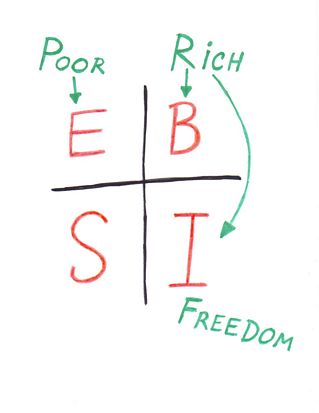
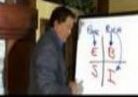
The Cash Flow Quadrant is an important diagram presented and explained by Robert Kiyosaki:

Robert Kiyosaki - Value of the dollar, buy and sell companies, wealth masters international

"There was an important diagram my rich dad showed me when I was a little boy. It was a diagram known as the Cash Flow Quadrant. And the Quadrant is made of four different people who make of the business world.
So my rich dad said, "In the business world there are Es and E stands for employees. And the employees, you can always tell who they are by their core values. An employee with the president, the generator of the company, will always say the same words. The words are, "I'm looking for a safe, secure job with benefits." That's what makes them employees because their core value is security."
The other one of the four is the S for the small business owner or the self-employed and again their core values will cause them to use the same words which are, "If you want it done right, do it by yourself." S means they are also solo. Generally one person act, they operate by themselves.
                                                         THE CASH FLOW QUADRANTRobert Kiyosaki - Rich Dad Poor Dad - Cash Flow Quadrant: Rich Dad’s Guide to Financial Freedom On the right side of the Cash Flow Quadrant are the Bs. And my rich dad said, "the B stood for big business, or like Bill Gates. For Bs define big business as 500 employees or more. And their words are different.
They'll say, "I'm looking for good system, good network, and the smartest people I know to help run my business." Unlike the S, they don't want to run the company by themselves. They want smart people run the company for them."
And then, the fourth of the Cash Flow Quadrant is the I. And the I stands for the investor. These are people who have money work hard for them. These people in the B Quadrant have people work hard for them. And these people in the E & S Quadrant are the people who work hard for the rich here in the right side of the Cash Flow Quadrant, for the Bs and Is.
Robert Kiyosaki - high paying jobs, good grades, multi level marketing...
So, early on in my life it was my poor dad who always said to me, "You know Robert, go to school, get a high paying job..." And so my poor dad's core value was to be an employee. He wanted a job security, promotions, steady pay check and all these.
And so it was my rich dad who said to me, "You know, Robert, if you really want to be rich, learn to build businesses." It made more sense to him to work hard to build a business. Something you own, and something you pass on from generation to generation to your kids.

Whereas my poor dad said, "work hard..." But my rich dad said, "Why would you work hard for something you'll never own, and you can get fired from it right away?" Again, that was the difference of values.
So my rich dad suggested I learn how to be a business owner and learn how to be an investor. And that's where the big difference is. On the left side of the Cash Flow Quadrant, these people work for security, they work for money also.
Robert Kiyosaki - Cashflow 202, Rich Dad Poor Dad, Financial Leverage
On the right side of the Cash flow Quadrant the B and I people's key value, what they want is they want Freedom, financial liberty. They don't want to have to work in a job anymore. They don't want to have to work for the rest of their lives.
So the beauty of building a business and learning how to invest is very simply that this is passive income.

You work hard for a few years and possibly for the rest of your life that passive income keeps flowing to you."


From 1960 to 2000 the value of the dollar has declined steadily.

"When you take a look at this 40-year run on the dollar, the dollar is designed economically to lose money every single year. So, why would you save something that loses money every year?
And what does this mean for you or for somebody on the retirement plans, if the value of the dollar goes down and your cost of living keeps going up after you retire?
To my rich dad that was bad advice and made no sense. Again different values."

This Cash Flow Quadrant applies to Network Marketing System. Robert Kiyosaki explains why:
Robert Kiyosaki & his wife Kim Kiyosaki - Financial Liberty, Passive Income
"I'm often asked why I recommend multi level marketing, especially when I'm not in network marketing business myself.
I'm like many people, early on, I had a very negative or close-minded attitude toward network marketing system.
But I've changed my mind. I've opened up the way to think, and I looked into the network marketing industry.
And I found some things that are extremely beneficial, especially for those people who look for changes from E and S to B and I in the Cash Flow Quadrant.
Communications and sales skills are essential for somebody in the B Quadrant. And network marketing companies, not all of them but some of them, have excellent training program that will teach you how to sell, how to communicate, how to build businesses...
Many people would not go to the B Quadrant because they are afraid of rejection. Multi level marketing teaches you how to handle your own fears, fear of rejection, and build that self-confidence. That's essential for the B Quadrant."

Download Ebook: The Cashflow Quadrant

Ebook Rich Dad Poor Dad by Robert Kiyosaki Full

Download:  Rich Dad Poor Dad by Robert Kiyosaki Full

Mp3 Files:

The book is the story of a person (the narrator and author) who has two fathers: the first was his biological father – the poor dad - and the other was the father of his childhood best friend, Mike – the rich dad. Both fathers taught the author how to achieve success but with very disparate approaches. It became evident to the author which father's approach made more financial sense. Throughout the book, the author compares both fathers – their principles, ideas, financial practices, and degree of dynamism and how his real father, the poor and struggling but highly educated man, paled against his rich dad in terms of asset building and business acumen.

The author compares his poor dad to those people who are perpetually scampering in the Rat Race, helplessly trapped in a vicious cycle of needing more but never able to satisfy their dreams for wealth because of one glaring lack: financial literacy. They spend so much time in school learning about the problems of the world, but have not acquired any valuable lessons about money, simply because it is never taught in school. His rich dad, by contrast, represents the independently wealthy core of society who deliberately takes advantage of the power of corporations and their personal knowledge of tax and accounting (or that of their financial advisers) which they manipulate to their advantage.
The book’s theme reduces to two fundamental concepts: a can-do attitude and fearless entrepreneurship. The author highlights these two concepts by providing multiple examples for each and focusing on the need for financial literacy, how the power of corporations contribute to making the wealthy even wealthier, minding your own business, overcoming obstacles by not fostering laziness, fear, cynicism and other negative attitudes, and recognizing the characteristics of humans and how their preconceived notions and upbringing hamper their financial freedom goals.
The author presents six major lessons which he discusses throughout the book:
  • The rich don’t work for money
  • The importance of financial literacy
  • Minding Your own business
  • Taxes and corporations
  • The rich invent money
  • The need to work to learn and not to work for money


Rich Dad Poor Dad Audio Book Part 1


Rich Dad Poor Dad Audio Book Part 2


Rich Dad Poor Dad Audio Book Part 3


Character Summaries

Rich Dad, Poor Dad revolves around three main characters: poor dad, rich dad (Kiyosaki’s second father) and the son (the author himself as narrator of the book). The essence of each character is:
  • Poor dad – educated but lacking the street smarts
  • Rich dad – very little education (eighth grade), tons of street smarts
  • Kiyosaki – the spectator who learns lessons from both but internalizes only rich dad’s traits

Poor Dad

The author compares his poor dad to the millions of fathers who encourage their sons to do well in school so they could get a good job with a good company. Poor dad believed in the traditional principles of working hard, saving money, and not buying material things that one cannot afford. He believed that having a good job with a solid company is what one should aspire for; hence he expresses disappointment when his son leaves the employ of a large, reputable corporation.
Poor dad looks to education as the passport to success. He held a doctorate degree, went to Ivy League universities, but was always struggling financially. He believed he would never be a rich man and the author points out that this became a self-fulfilling prophecy. Poor dad was more interested in a good education than the subject of money. The author wrote that his poor dad would always say things like, “I’m not interested in money” or “money doesn’t matter.”
The author points out that poor dad was preoccupied with things like job tenure and security, Social Security, vacation and sick leaves, company insurance and salary raises and promotions. The author felt that his poor dad was more interested in these factors rather than on the job itself. This is what the author calls being trapped in the Rat Race. His poor dad worked hard incessantly but somehow never made it ahead financially. Poor dad’s approach to the subject of money was based on working hard to have enough money to pay the bills (in contrast to rich dad’s approach to make one’s money work for him).

Rich Dad

The author wrote that it was when he was nine years old that he started realizing that his rich dad made much more sense than his poor dad. It was from rich dad that the author learned not to say, “I can’t afford it”, but instead to ask, “how can I afford it?” He explains this principle by relating an incident when he and his best friend Mike went to work for Mike’s father. Rich dad paid them very low wages deliberately so that would stir anger and a sense of injustice in them and eventually for them to realize that in order to get ahead, one must work for himself and not for others. For example, in that part of the book when the author complains to rich dad that he can hardly afford to buy anything with the wages he is paid, rich dad tells him that he shouldn’t dwell on the fact that his wages are low, but instead ask “how can I make more money” because this stimulates the brain to take action. His rich dad says that when someone says, “I can’t afford it”, his brain stops working. It therefore kills initiative and promotes passivity.
The author adds that while his poor dad invested time and effort in education, he did not have any knowledge on investing. His rich dad, by contrast, was very skilled in the investment game because that’s all he did. The attitude of his rich dad about money was manifested in the saying “the lack of money is the root of all evil” (his poor dad, on the other hand, believed that the love of money is the root of all evil).
According to the author, rich dad also nurtured the idea that taxes punished producers and rewarded the non-producers. He was the type who encouraged money talk at the dinner table and was portrayed by the author as someone who learned to manage risk, instead of not taking risks.

The Son (Robert T. Kiyosaki)

The author begins his book, Rich Dad, Poor Dad, by saying that he is fortunate in having had two fathers. He learned valuable lessons from both of them, but in Chapter One it becomes evident which father had the more sensible approach towards money. He compares and contrasts both fathers’ views about working hard, getting an education, saving and investing and realizing how habits of the rich and poor significantly differ. He attributes his financial acumen through the many conversations he carried out with his rich dad.
The author takes a common sense approach to the subject of money and emphasizes the need for accounting knowledge so that the reader clearly understands what assets and liabilities are. He makes simple diagrams that show the inflow and outflow of money and how the rich build up the asset column and the poor build up the liability column (expenses). It is obvious that the author places much importance on accounting knowledge – no matter how boring it is - because he says it is “the most important subject in your life.”
By using numerous examples and anecdotes, the author drives home his messages effectively, revealing his pro-capitalist stance.
The author also shows his understanding of the mechanisms employed by the government and the tax man and concludes that it is the middle class that actually pay for the poor. The rich are the ones who are hardly taxed because they have the knowledge to use tax legislation to their advantage.

Chapter Summaries

Chapter 1: Rich Dad, Poor Dad

The story of Robert Kiyosaki and Mike starts in 1956 Hawaii, when both boys were a nine years old. Their first get-rich scheme was a counterfeit nickel making company. They made plaster molds of the nickels and melted lead toothpaste tubes and filled the molds to produce the nickels. Their plan was foiled by Mike's father, who informed the boys of their illegal activity. After that day, the boys dedicated their free time to leaning about finance and economics from Mike’s father, the rich dad. The first lesson Mike’s dad made the boys experience was hatred of the “Rat Race”. He was able to achieve this by making the boys work in one of his grocery stores for three hours for ten cents an hour pay. Within a few weeks, Kiyosaki, tired of being exploited for labor, demanded that he receive a raise, but instead, Mike’s father cut his pay and told him to work for free. Eventually, both boys tired of being under appreciated (and unpaid) and they met individually with Mike's father. In their meetings with rich dad, he apologized for lack of pay and he offered them either the moral of the lesson or a pay raise. Both boys chose to learn the moral of the lesson, while rich dad offered them pay raises. He started at twenty-five cents, a dollar, two dollars, and even five dollars, which would have been considered a large amount of money for an hourly wage, but the boys still remained strong with their decision to learn the moral of the lesson. The lesson to get out of the “Rat Race” and instead of spending your whole life working to put a little money in your pocket and a bunch of money in someone else’s pocket, have people work hard to put money in your pocket. Out of all the lessons that were taught to the boys, this one was the most important. (Kiyosaki and Lechter 28-35)

Chapter 2: The Rich Don’t Work for Money

The author tells his readers to forget the notion that life teaches. He says “the only thing that life does is push you around.”
This chapter talks about people who are more comfortable in playing it safe because they were not taught early to take risks. The author develops the ideas that the poor and the middle class work for money, fear and greed cause ignorance and poverty, and the importance of using one’s emotions versus thinking with emotions. The author also stresses that opportunities in life come and go; the rich recognize them instantly and turn them into gold bullions. Others do not see these opportunities because they’re too busy seeking money and security. As the author says, well “that’s all they’re going to get.”

Chapter 3: Why Teach Financial Literacy

The story of Kiyosaki and Mike continues later in life, 1990, and both of the now adults have made incredible leaps and bounds with regards to their finances and their socioeconomic status. Mike was able to take the lesson from his father and apply them to his life. He took control of his father’s large business and increased every aspect of the empire and he is currently raising his son to take control of the company once he retires. As for Kiyosaki, he was able to retire at the age of 47 with his wife Kim. At a business meeting at the Edgewater Beach Hotel in Chicago, Charles Schwab, Samuel Insull, Howard Hopson, Ivar Kreuger, Leon Frazier, Richard Whitney, Arthur Cotton, Jesse Livermore and Albert Fall met to talk about different investments and money schemes. Twenty-five years later, a report stated that a large majority of those extremely wealthy people that met in Chicago either ended up in jail, dead or penniless. The major idea to take from the results of these unfortunate entrepreneurs is that you need financial literacy to be and stay safe. The idea that was represented with the big 1920’s entrepreneurs is still prevalent today with some of the professional athletes making poor financial decisions and ending up with next to nothing. This specific lesson is meant to teach people not to be wise with your money once you have it, but rather be smart with your money before you have it. In a way, don’t try to build a skyscraper or even a house without building a strong foundation first. According to Kiyosaki, there is one rule, and only rule that can help a person to build a strong foundation; know the difference between an asset and a liability, and make sure that you only control assets. (Kiyosaki and Lechter 56)
When it comes to beliefs about money buying freedom and the ability to enjoy retirement without fear of outliving one’s money, this chapter catches the essence of the author’s advocacy for financial independence. He says, “Intelligence solves problems and produces money. Money without financial intelligence is money soon gone.”
The author believes that financial literacy begins with a working knowledge of accounting. It is essential to know the difference between assets and liabilities. To make these two terms understandable to readers, the author makes a rudimentary diagram of these two concepts to motivate them to purchase assets in order to solidify the asset column, while keeping the liabilities (expenses) to a bare minimum. The author states that poor people remain poor because they do the opposite. They pile up on their liabilities and have zero assets so that their balance sheets and income statements look out of kilter. People have to understand that it’s not how much they make, but how much they keep according to the author, and this is an essential principle that this chapter focuses on.

Chapter 4: Mind Your Own Business

In this chapter, the author slowly introduces the concept of real estate investing and uses McDonald’s as an example. He points out that McDonald’s may not make the best hamburgers in the world, but owns the “most valuable intersections and streets in America.” The author remarks that individuals need to mind their own business if they wish to become financially self-sufficient. They shouldn’t mind their employer’s business, they should strive for ways to become their own boss and nurture their own businesses.
The author continues his discussion on building assets. To him, real assets are anything with value – stocks, bonds, mutual funds, income-producing real estate, notes, royalties from intellectual property, etc.
This chapter also reveals the author’s investment preferences: real estate and stocks. For real estate, he says he starts small, and trades his properties for bigger ones and then delays paying taxes on capital gains through one IRS mechanism.

Chapter 5: The History of Taxes and the Power of Corporations

The author states that the poor let the big machinery (corporations) manipulate them whereas the rich know how to use big machinery. This means that the rich possess the knowledge and savoir faire to use the power of the corporation to protect and enhance their assets. The advantage of a corporation versus that of the individual lies in how corporations pay taxes, according to the author. He makes this point clearly: individuals earn money, pay taxes on that money, and live with what’s left. The corporation, on the other hand, earns money, spends everything it can, and is taxed on anything that’s left. The author adds that individuals may not be aware of how much they’re being manipulated; they work from January to mid-May to enrich the government by paying taxes on their income. In the meantime, the rich are hardly taxed.
The author recommends developing one’s financial IQ as one way of leaving the humdrum of daily existence. This is accomplished by gaining knowledge of accounting, investing, understanding the markets, and the law. He says being ignorant gets you bullied whereas being informed translates into “you have a fighting chance.”

Chapter 6: The Rich Invent Money

The author develops the concept of self-doubt. He says that each person is born with talent but that talent is suppressed because of self-doubt and fear. He remarks that it’s not necessarily the educated smart people who get ahead but the bold and adventurous. People never get ahead financially even if they have plenty of money because they have opportunities that they fail to tap, he stresses. Most of them just sit around waiting for opportunity to happen. The author’s idea is that people create luck; they should not wait around for it. He says it’s the same with money. It has to be created.
In this chapter, the author discusses the importance of an education (although some critics say that he appears to downplay its importance). The author is clear by saying, “a trained mind is a rich mind.” In his analysis, there are two types of investors, each with a different mind set: those who go for the packaged investment, and those who customize investments to suit their objectives.
The author encourages people to hire people more intelligent than they because by capitalizing on the knowledge of others, an intelligent individual builds his own knowledge base and therefore has more power over those who don’t know.

Chapter 7: Work to Learn, Don’t Work for Money

This is the chapter where the author talks about the skills individuals need to develop for financial success.
The reader is given an example of a young woman who had a Master’s Degree in English Literature and who was offended when it was suggested that she learn to sell and do direct marketing. After all the hard work for her degree, she didn’t think she would have to stoop so low to learn how to be a salesperson, a profession she didn’t think very highly of. The author uses this example to emphasize that there are other skills people need to cultivate to help them on the road towards financial freedom.
The author mentions management skills. He says individuals need to know how to manage cash flow, systems, and people. To that he throws in selling and marketing skills. He puts equal emphasis on communication skills. He says there are many people who have the scientific bent and hence have a powerhouse of knowledge, but they fail miserably in communications. These are the people who are “one skill away from great wealth.”
The author calls attention to one outstanding trait of great wealthy families: they give money away – plenty of it – unlike the poor who feel that charity begins at home.

Chapter 8: Overcoming Obstacles

The opinion of the author is that five personality traits hamper human beings: fear, cynicism, laziness, bad habits, arrogance. He explains that while it’s normal to have fear, what matters is how one handles it. The author shares his sentiment about his particular fondness for Texas and Texans: “When they win, they win big and when they lose, it’s spectacular.”
The author maintains that it’s not merely a question of balance but also FOCUS. He recommends that the Chicken Littles of the world be ignored. They’re only concerned about the sky falling, spending the rest of their lives in pessimism. He says he constantly hears people saying they want to be rich, but when it’s suggested that money can be made from real estate, their initial reaction is “but I don’t want to fix toilets.” The author believes it’s ironic that they’re more concerned about trivia like fixing toilets rather than what lies ahead in real estate. As a final point, the author states that it is healthy to be greedy, so when faced with a decision, a person must always ask, “What’s in it for me?”

Chapter 9: Getting Started

This chapter serves as a section on tips to create and build personal wealth. His first tip is, find a reason greater than reality to motivate you. What he means by this is to wake up the financial genius in oneself by empowering the mind. He says that people must have a strong /purpose for living.
The next tip is to feed the mind. By feeding the mind, the author contends that people acquire power of choice.
The author also advises people to choose friends carefully. He says to avoid people who proclaim incessantly that the sky is falling and instead encourages readers to spend time with people who enjoy talking about money because they may have valuable lessons to share. The author also believes that people should study one field, and then go out and learn a new one, although it is important to choose what one studies.
Here is another tip that the author observes most people don’t practice: pay yourself first. Even if short of cash, people must pay themselves first. This goes in tandem with managing three things efficiently: cash flow, people and personal time.
Another tip the author gives is being generous. He thinks it makes a lot of sense to pay one’s broker well as he’s an ally, and “your eyes and ears to the market.”
The author suggests having heroes. They are indispensable in life because they not only inspire, they also make it seem so easy. They stimulate the human mind into thinking, “If they can do it, why can’t I?”
“Teach and you shall receive” is another tip that the author shares. His words are eloquent concerning this idea: “There are powers in this world that are much smarter than we are. You can get there on your own, but it’s easier with the help of the powers that be. All you need to be is generous with what you have, and the powers will be generous with you.”

Chapter 10: Still Want More? Here are Some To Do’s

This chapter is sort of a supplement to the previous chapter. It gives readers additional tips to help them reach for financial rewards. One tip is to stop doing what you’re doing – that is, if it’s no longer working or viable. The author encourages readers to look for new ideas, to pick the brains of individuals who have the experience and who have already done what one aspires to do. He advises on keeping the learning curve alive, taking courses, buying tapes, attending seminars.
In looking for real estate investment opportunities, the author recommends looking in the right places. One way of doing this is to jog around the neighborhood one is interested in. People can acquire real estate even if they don’t have sufficient funds for the down payment. In fact, with a bit of cleverness, the author says people can even make money with no capital.


Themes in Rich Dad, Poor Dad

One theme that’s apparent in this book is that for an individual to be wealthy, he must aim to own the system or means of production, rather than work for another individual. The author stresses that there is obviously something confining about being an employee; it shuts the mind to other possibilities and it stunts initiative.
Financial intelligence is THE most powerful asset. By studying the precepts of accounting and investing, the author believes that individuals will be able to see the difference between an asset and a liability; in fact it is the more concrete application of learning what’s right and what’s wrong. Generating a string of expenses is wrong, building assets is right.
Unlike individuals who earn and then pay taxes on what they earn, corporations earn, spend what they want to spend, and pay taxes on what’s left. Corporations, therefore, hold a certain degree of power. The rich know how to use this power, the poor don’t.
The author also believes that true luxuries are experienced when they are the outward manifestations of intelligent investing and asset building. He cites the example of his wife purchasing a Mercedes Benz because it was the car she liked and worked hard to be able to purchase it. The author cautions however about keeping up with the Joneses and getting into debt because of this human frailty.
Fear, laziness, cynicism and arrogance are to be blamed for most of human inaction.

Download:  Rich Dad Poor Dad by Robert Kiyosaki Full

Mp3 Files: